Oat Milk vs Almond Milk in Smoothies: Which Plant Base Wins?
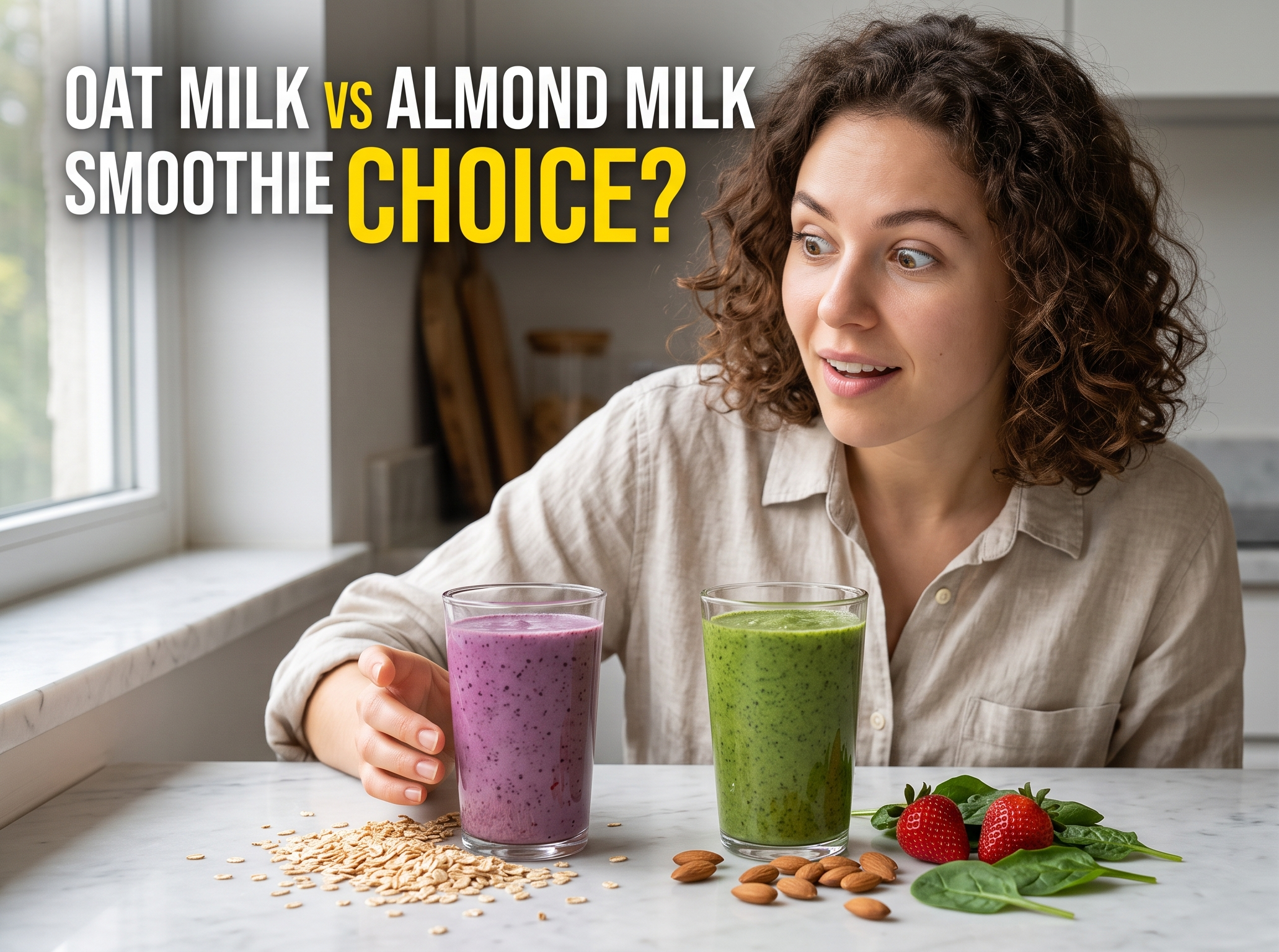
Choosing between oat milk vs almond milk in smoothies comes down to three major factors: desired texture, calorie density, and how well the base pairs with your favorite fruits. Oat milk delivers a naturally rich, ultra-creamy mouthfeel that mimics dairy milk, making it ideal for tart berries, dark cocoa, and tropical blends. However, it contains more carbohydrates and calories per cup. On the other hand, almond milk offers a lightweight, neutral profile with significantly fewer calories and carbohydrates, which allows green vegetables and subtle fruit flavors to shine without masking them.
Quick Summary
- Oat milk creates a thicker, velvet-like consistency and complements acidic or strong fruit profiles.
- Almond milk keeps smoothies light, low-calorie, and low-carb, perfect for green daily blends.
- Oat milk adds naturally occurring oat sugars and carbohydrates, while unsweetened almond milk has minimal carbohydrates.
Scope of This Plant Milk Comparison
This comparison focuses strictly on how oat milk and almond milk perform as liquid bases in everyday home blending. We examine how each milk affects smoothie viscosity, natural sweetness, fruit pairings, and caloric balance. Broad dietary theories, commercial coffee foam performance, and general dairy substitution science are outside the scope of this decision guide.
Key Evaluation Criteria: Texture, Calories, and Flavor
Evaluating a plant-based liquid base requires looking beyond basic nutritional labels to see how ingredients interact inside a blender jar. When selecting a liquid base, three primary criteria determine how your finished smoothie will taste and feel.
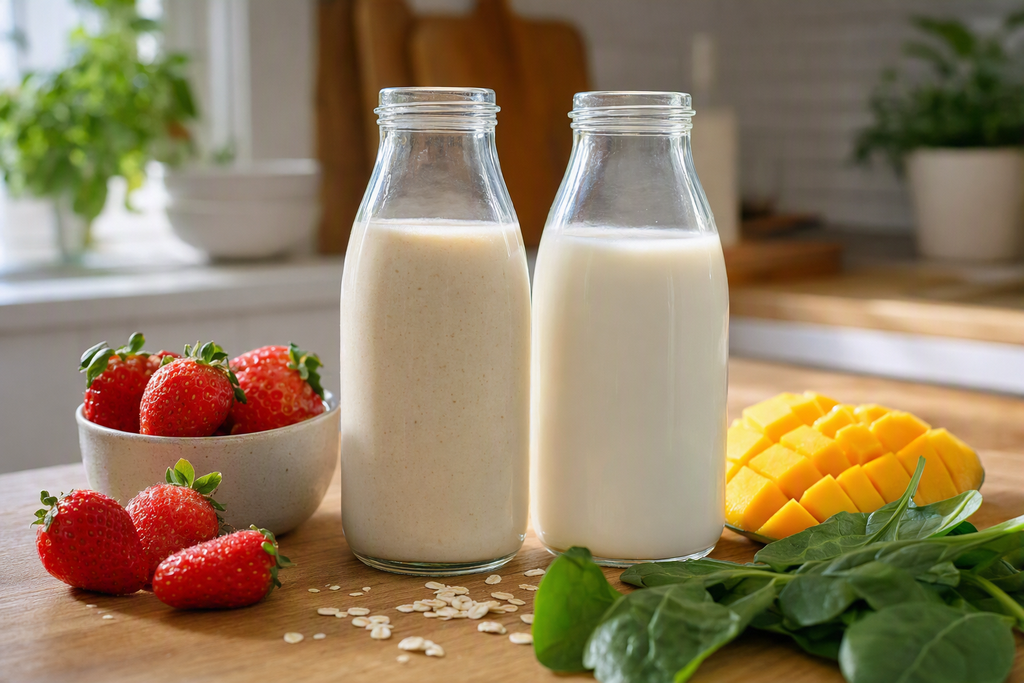
First, mouthfeel and creaminess depend on soluble fiber and natural fat content. Oat milk naturally contains beta-glucan fiber, which creates a rich structure that coats frozen ingredients smoothly. Almond milk relies on fine nut solids suspended in water, producing a thinner liquid that lets frozen fruit determine the total thickness.
Second, calorie density and carbohydrate balance shape the nutritional structure of your drink. A cup of plain oat milk provides higher natural energy through complex carbohydrates, whereas unsweetened almond milk offers a low-calorie background that leaves room for added protein powders or nut butters.
Third, flavor pairing flexibility controls how fruit acidity and bitterness balance out. Oat milk carries a subtle grain sweetness that softens sharp citrus or unsweetened cocoa powder. Almond milk stays quietly in the background, allowing greens like spinach and kale to retain their crisp character.
Key Takeaways
- Oat milk yields natural body and creaminess without needing banana or avocado additions.
- Almond milk is the top pick for calorie-conscious or low-carbohydrate smoothie routines.
- Fruit pairing depends on contrast: oat milk balances tart fruit, while almond milk highlights delicate flavors.
| Evaluation Factor | Oat Milk | Almond Milk (Unsweetened) |
|---|---|---|
| Texture & Creaminess | Thick, velvety, full-bodied | Light, fluid, crisp |
| Average Calories (per cup) | 110–130 kcal | 30–40 kcal |
| Carbohydrate Profile | 15–20g (includes soluble fiber) | 1–2g |
| Best Fruit Pairings | Strawberries, tart cherries, mango, cacao | Spinach, blueberries, peach, green apple |
Comparing Oat Milk vs Almond Milk in Smoothies
When assessing oat milk vs almond milk in smoothies, the blending outcome varies distinctly across popular recipe styles. Oat milk acts as a body builder. If you blend frozen berries and water, the result can feel thin and icy. Swapping water or almond milk for oat milk introduces a silky emulsion that holds frozen fruit particles together smoothly.
Almond milk functions as a neutral solvent. It hydrates powders and frozen fruit without altering the natural flavor profile of your ingredients. In green daily smoothies containing kale, cucumber, and chia seeds, almond milk ensures the beverage stays refreshing rather than heavy.
Suitability Filter: Which Base Fits Your Blending Goals?
Select oat milk if you want to create dessert-like breakfast bowls, smoothie bowls, or rich chocolate-peanut butter shakes without using dairy cream. It works especially well for individuals who struggle with the bitter edge of raw plant powders or tart frozen fruits.
Select unsweetened almond milk if you are monitoring overall caloric intake, following a ketogenic or low-carbohydrate lifestyle, or adding extra caloric ingredients like hemp seeds, nut butter, or avocado into your blend.
Risks and Limitations to Consider
While both options are popular plant bases, each carries specific trade-offs depending on your dietary sensitivities and store choices.
Oat milk can cause unintended blood sugar spikes if consumed in large quantities without sufficient protein or healthy fats to slow down digestion. Additionally, commercial oat milk products frequently contain added vegetable oils and gums to stabilize texture, which may not suit sensitive stomachs.
Almond milk provides minimal natural protein per serving compared to soy or dairy options. Some store-bought varieties also contain carrageenan or thickeners, while those with tree nut allergies must avoid almond milk entirely.
Final Decision Framing
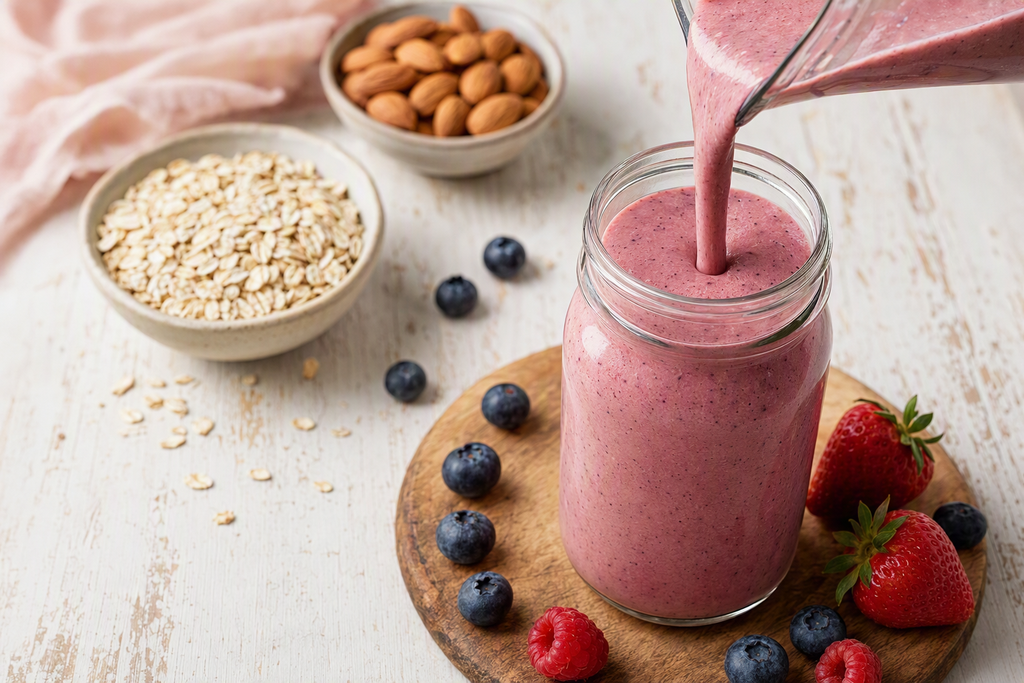
Your choice between these two liquid bases comes down to practical nutrition math and texture preference. Oat milk trades higher carbohydrate density for luxury texture and automatic sweetness. Almond milk trades rich thickness for complete nutritional flexibility and minimal calories.
Bottom Line
- Choose oat milk for thick, indulgent fruit blends or cocoa-based post-workout shakes.
- Choose almond milk for light green smoothies, daily low-calorie hydration, or ketogenic routines.
- Combine half almond milk and half oat milk if you want a balanced compromise of low calorie density and smooth texture.
Matching your liquid base to your target ingredient list ensures every morning smoothie achieves the ideal balance of flavor and freshness. Adjust liquid amounts based on whether you prefer a drinkable bottle blend or a spoonable bowl texture.
Frequently Asked Questions
Does oat milk make smoothies thicker than almond milk?
Yes. Oat milk naturally contains soluble oat fiber (beta-glucan), which creates a noticeably thicker, more velvety emulsion when blended with frozen fruit compared to almond milk.
Which plant milk has fewer calories for weight loss daily smoothies?
Unsweetened almond milk has significantly fewer calories, averaging 30 to 40 calories per cup, compared to 110 to 130 calories per cup for unsweetened oat milk.
Can I mix oat milk and almond milk together in one smoothie?
Yes. Blending equal parts oat milk and unsweetened almond milk is a popular technique to achieve a creamy texture while keeping overall calories and carbohydrates moderate.
Which fruit flavors pair best with oat milk in a blender?
Oat milk pairs exceptionally well with tart berries, strawberries, mango, banana, and dark chocolate or espresso smoothie recipes due to its natural grain sweetness.
Does almond milk mask the taste of fresh green spinach or kale?
No. Unsweetened almond milk has a light, neutral profile that allows the naturally crisp and earthy flavors of spinach, kale, and green apples to stay prominent.
Should I choose certified gluten-free oat milk for smoothies?
If you have celiac disease or gluten sensitivity, always check for certified gluten-free oat milk, as oats are often processed in facilities that handle wheat and barley.