
Greek Yogurt vs. Protein Powder: 4 Amazing Differences
Greek yogurt vs. protein powder for a post-workout smoothie comes down to one practical trade-off: protein powder gives you an exact, repeatable gram count, while Greek yogurt gives you a whole food with a naturally thick texture and a less predictable number. Neither is a worse choice — they just do different jobs.
Protein powder adds a known, consistent amount of protein per scoop; Greek yogurt adds creaminess, some calcium, and body without needing anything else in the blender. This page compares them specifically for the post-workout use case, not as a general “which is healthier” debate.
What This Comparison Does and Doesn’t Cover
This page covers Greek yogurt vs. protein powder for one specific goal: getting a predictable amount of protein into a post-workout smoothie. It doesn’t cover probiotics, weight management, or which one is “healthier” in general — those depend on the rest of your diet, not on this one decision.
What it does cover: how much protein each realistically adds, how that shows up in taste and texture, and which one fits a post-workout routine better.
Quick Summary
- This comparison is scoped to post-workout protein, not general health or gut-health claims.
- Predictability of protein amount is the main practical difference between the two.
How We’re Judging This Decision
Four factors matter most for a post-workout smoothie specifically:
- Protein per serving, and how consistent that number is — a scoop is a fixed amount; a cup of yogurt varies by brand and fat content
- Speed of absorption — whether the protein source is digested quickly enough to matter in a post-workout window
- Effect on texture and thickness — yogurt thickens a smoothie on its own; powder needs a thickener (banana, oats, ice) to do the same
- Convenience — powder travels and stores easily; yogurt needs refrigeration and has a shorter shelf life
Key Takeaways
- Predictability and convenience separate these two more than raw nutrition does.
- Texture effects are opposite: yogurt thickens, powder needs help to thicken.
Greek Yogurt vs. Protein Powder: The Comparison
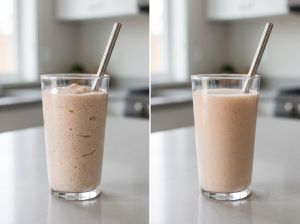
A standard scoop of whey or plant protein powder typically supplies somewhere around 20–25 grams of protein, and that number is printed on the label and stays consistent scoop to scoop. Plain nonfat Greek yogurt runs roughly 15–20 grams of protein per cup, but that range shifts with brand, straining method, and whether it’s nonfat, low-fat, or full-fat — full-fat versions generally run lower in protein per cup than nonfat ones, since more of the cup’s weight is fat rather than strained curd.
Both are considered fast-digesting relative to whole-food protein sources like meat or legumes, which is part of why both show up so often in post-workout recommendations. The NIH Office of Dietary Supplements’ fact sheet on exercise and athletic performance covers protein timing and absorption in more detail if you want the fuller research context. For actual gram-for-gram comparisons across specific yogurt brands and protein powders, USDA’s FoodData Central database is the most reliable free source — labels alone can be inconsistent about how they round serving sizes.
In Short
- Protein powder gives a more exact, repeatable gram count.
- Greek yogurt’s protein content is close but brand-dependent — check the label, don’t assume.
Who Should Choose Greek Yogurt vs. Protein Powder

Protein powder makes sense if you’re tracking a specific protein target and want that number to be reliable every time, or if you want a smoothie that stays thin without added thickness. It’s also the more practical choice if refrigeration isn’t reliably available — at the gym, traveling, or at work.
Greek yogurt makes sense if you’d rather get protein from a whole food than a powder, if you like a naturally thick, creamy texture without adding a thickener, or if you’re already buying it for other meals and don’t want to keep two separate protein sources on hand.
Bottom Line
- Protein powder suits precision and convenience.
- Greek yogurt suits a whole-food preference and built-in creaminess.
Risks and Limitations of This Comparison
This comparison assumes plain, minimally sweetened Greek yogurt — flavored varieties often carry meaningfully more added sugar and less protein per cup than plain versions, which changes the comparison. It also doesn’t account for lactose sensitivity, which affects both dairy-based protein powder and Greek yogurt similarly, or for cost per serving, which varies widely by brand and region.
Neither option is a substitute for total daily protein intake planning — this page is about one smoothie, not a full nutrition plan.
Key Takeaways
- Flavored yogurt changes the math — this comparison assumes plain.
- Lactose sensitivity affects both options similarly, not just one.
Making the Call for Your Smoothie
If a specific, repeatable protein number matters more than anything else, protein powder is the more dependable choice. If you’d rather get that protein from a whole food and don’t mind some variation in the exact gram count, Greek yogurt is a reasonable substitute — plain, not flavored, for the closest comparison.
Both get a post-workout smoothie to a similar place nutritionally. The real difference is precision versus a whole-food preference, and that’s a personal call, not a nutritional one.