Whey vs. Plant Protein: 4 Amazing Differences
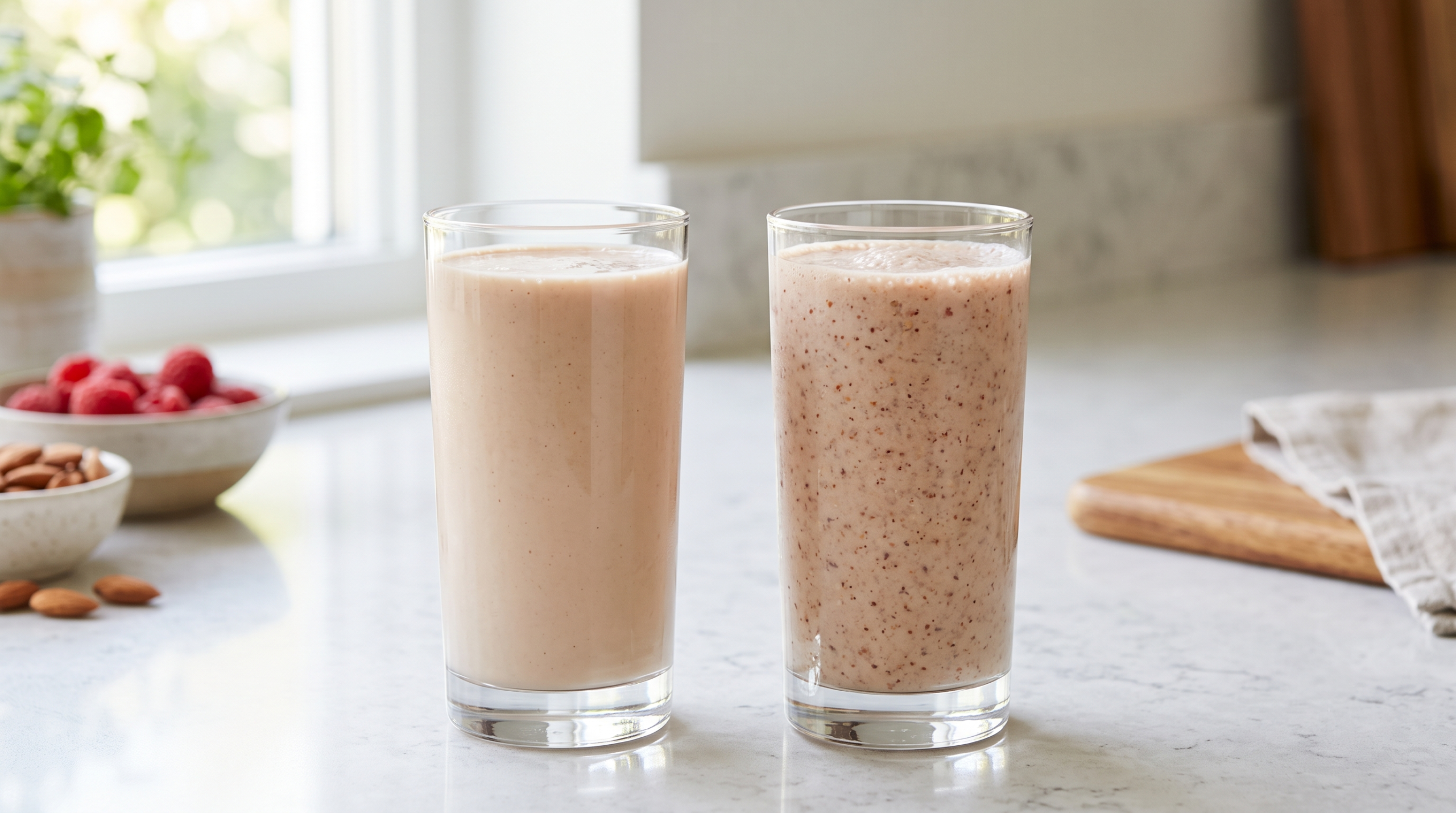
Whey vs. plant protein comes down to one practical difference in a smoothie: whey blends smoother, and plant protein usually needs help to catch up. Whey dissolves faster, adds less grit, and doesn’t thicken a smoothie the way pea- or rice-based blends often do. That’s a texture fact, not a nutrition verdict — plant protein isn’t inferior, it just behaves differently once it hits a blender.
If you’ve ever ended up with a gritty, chalky smoothie right after switching protein powders, the powder itself — not your blender or your recipe — is usually the reason. This page looks specifically at texture and blend consistency, not at which protein builds more muscle or which one tastes better.
What This Comparison Does and Doesn’t Cover
This is a texture comparison only. It doesn’t rank whey protein vs. plant protein on muscle-building results, amino acid completeness, price per serving, or flavor — those are separate questions with separate answers, and lumping them together is how most protein guides end up vague.
What it does cover: why whey protein and plant protein behave differently in a blender, and what that means for the smoothie sitting in your glass.
Quick Summary
- This page compares blend texture only, not nutrition or muscle-building value.
- Whey and plant protein dissolve differently, and that difference shows up in the glass.
How We’re Judging Blend Texture
Four factors decide whether a protein powder disappears into a smoothie or leaves it grainy:
- Solubility in cold liquid — how completely the powder dissolves rather than sitting as fine particles
- Particle size after processing — finer, more refined powders blend smoother than coarser ones
- Thickening effect — some powders absorb liquid and thicken a smoothie beyond what the recipe intended
- How well common add-ins mask texture — banana, oats, and ice can hide mild grit that would be obvious in a thinner smoothie
These are the same factors a juice bar operator checks before committing to a supplier’s protein powder, since a gritty batch gets sent back by customers fast.
Key Takeaways
- Solubility and particle size matter more than brand or marketing claims.
- Add-ins can mask minor grit but won’t fix a genuinely coarse powder.
Whey vs. Plant Protein: The Texture Comparison
Whey protein — especially whey protein isolate, which has had most of the fat and lactose filtered out — is highly soluble in cold liquid. It disperses quickly in a blender and typically leaves a thin, smooth result close to the texture of a milkshake made without powder at all. Whey concentrate is slightly less refined and can leave a faint film, but it’s still smoother than most plant options.
Plant proteins are a mixed group. Straight pea protein isolate has a well-known reputation for grittiness — it’s less soluble and has a coarser particle structure, so it tends to leave a slightly chalky texture even after a full blend cycle. Soy protein isolate is the exception among plant proteins: it’s processed to be highly soluble and blends closer to whey than to pea protein.
Rice protein sits in between, and many commercial “plant protein” blends now combine pea, rice, and sometimes pumpkin seed specifically to smooth out the texture problem any single plant source has on its own.
The government’s Dietary Supplements for Exercise and Athletic Performance consumer fact sheet from the NIH Office of Dietary Supplements covers how different protein sources are processed and absorbed, which is useful background if you want to understand why solubility varies by source in the first place. USDA’s FoodData Central database is a reasonable starting point if you want to compare protein content across specific brands and blends before you buy.
In Short
- Whey isolate and soy isolate blend the smoothest of the common options.
- Straight pea protein is the most likely to leave noticeable grit.
- Multi-source plant blends (pea + rice, or pea + pumpkin seed) split the difference.
Who Should Choose Whey vs. Plant Protein for Smoothie Texture
Whey makes sense if the smoothest possible texture matters to you and dairy isn’t a problem — it’s the more forgiving choice across blenders, recipes, and liquid ratios, and it’s harder to mess up.
Plant protein makes sense if avoiding dairy is a real requirement, not just a mild preference, or if you’re building a thicker smoothie bowl where extra body actually works in your favor instead of against it. In that case, choosing a multi-source blend over a straight pea isolate meaningfully improves the texture outcome.
Bottom Line
- Whey suits people prioritizing smoothness above other factors.
- Plant protein suits people with a genuine dairy restriction, especially with a multi-source blend.
Risks and Limitations of This Comparison
Texture tolerance is subjective — what one person calls “slightly grainy,” another won’t notice at all, especially once ice or frozen fruit is in the mix. This comparison also doesn’t account for lactose intolerance or dairy allergy, which can make whey the wrong choice regardless of texture, or for digestive sensitivity some people report with certain plant protein fibers. If either applies to you, that consideration should outweigh texture.
This page also doesn’t cover amino acid completeness or muscle-recovery value — that’s a separate decision from how a powder behaves in a blender, and conflating the two is a common mistake in protein comparisons.
Key Takeaways
- Personal texture sensitivity varies — this is a general pattern, not a guarantee for every blender or brand.
- Dairy tolerance and digestive sensitivity should override a texture preference when they apply.
Making the Call for Your Smoothie
If texture is genuinely the deciding factor and no dietary restriction is in play, whey protein isolate is the more consistent, more forgiving choice across recipes. If a dairy-free requirement is non-negotiable, a multi-source plant blend — not a straight pea isolate — is the better version of the plant-protein option specifically for texture.
Neither option is objectively “better” outside the specific question this page answers. The right pick depends on what you’re optimizing for — texture, dietary restriction, or something else entirely — and texture is just one input into that decision.