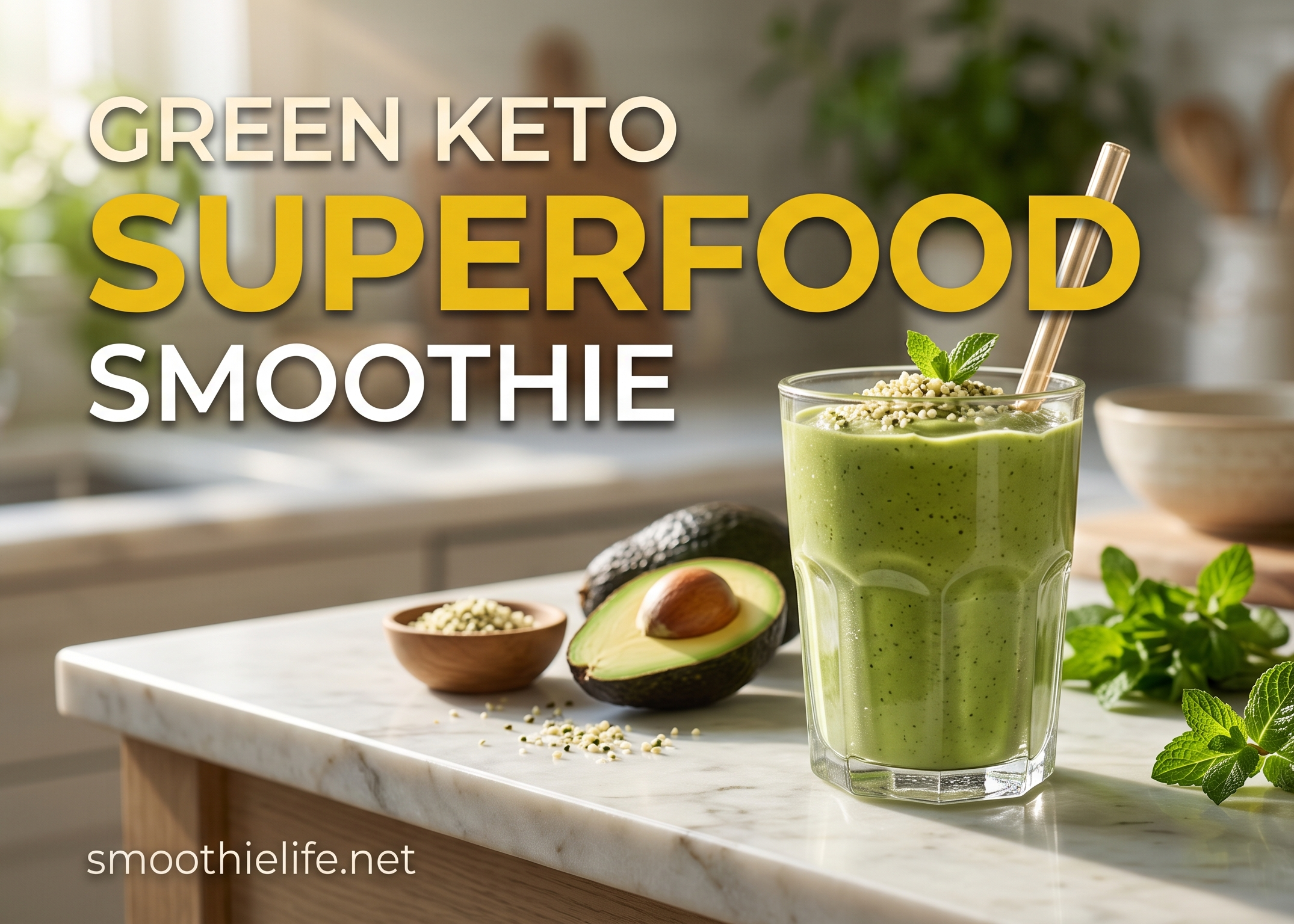
How to Make a Keto Smoothie Without Protein Powder Using Whole Foods
Creating a delicious keto smoothie without protein powder is simpler than most low-carb dieters realize. Commercial protein powders often contain artificial sweeteners, chalky fillers, and hidden carbohydrates that kick you out of ketosis. By replacing isolated powders with nutrient-dense whole foods like plain Greek yogurt, cottage cheese, hemp seeds, and almond butter, you achieve a creamier texture while maintaining an optimal ketogenic macro profile.
Quick Summary
- Whole-food protein bases eliminate artificial sweeteners and digestive discomfort associated with isolated commercial powders.
- Full-fat plain Greek yogurt, cottage cheese, and shelled hemp hearts offer complete amino acid profiles with minimal net carbohydrates.
- Blending healthy fats like avocado and nut butter stabilizes blood sugar and boosts satiety without relying on whey or soy isolates.
Why Skip Commercial Powders on a Ketogenic Diet?
Many commercial protein supplements rely on sugar alcohols like maltitol or artificial flavorings that cause gastrointestinal distress. Additionally, processed protein isolates lack the natural micronutrients and healthy fats that whole foods provide naturally.
When you build a low-carb drink using real food ingredients, you gain total control over every single gram of net carbohydrates. Whole ingredients introduce rich natural textures and subtle natural flavors that factory powders simply cannot replicate in a blender.
How to Make a Keto Smoothie Without Protein Powder That Satisfies
To craft a satisfying keto smoothie without protein powder, you must combine high-protein whole ingredients with healthy fat sources. Your primary goal is achieving 15 to 25 grams of protein while keeping net carbohydrates under 6 grams per serving.
Selecting the right foundational ingredient determines both the final mouthfeel and the macro breakdown of your drink. Cultured dairy options deliver a tangy, thick texture, while seed and nut bases offer a silky, plant-based alternative for dairy-free routines.
Key Takeaways
- Hemp hearts deliver the highest protein-to-net-carb ratio among plant-based whole foods.
- Full-fat cottage cheese creates a velvety texture similar to rich cheesecake when blended thoroughly.
- Always calculate net carbs by subtracting dietary fiber from total carbohydrates for whole food sources.
| Protein Base (100g) | Protein (g) | Fat (g) | Net Carbs (g) | Best Flavor Pairing |
|---|---|---|---|---|
| Shelled Hemp Hearts | 31.6 | 48.7 | 2.6 | Spinach & Matcha |
| Full-Fat Cottage Cheese | 11.0 | 4.3 | 3.4 | Unsweetened Cocoa |
| Full-Fat Greek Yogurt | 9.0 | 5.0 | 3.8 | Wild Blackberry & Vanilla |
| Natural Almond Butter | 21.0 | 55.0 | 8.8 | Cinnamon & Espresso |
The Core Whole-Food Protein Champions
Choosing the correct natural ingredients ensures your drink supplies sustained energy without spiking blood sugar. According to nutritional data verified by the USDA FoodData Central database, raw seeds and cultured dairy offer exceptional protein density alongside essential fatty acids.
Shelled hemp hearts represent the premier plant-based candidate. Three tablespoons deliver roughly ten grams of complete protein while contributing minimal digestible carbohydrates, making them ideal for strict daily carb limits.
Full-Fat Cottage Cheese: The Secret Creaminess Engine
Cottage cheese is often overlooked in low-carb blending due to historical low-fat diet associations. However, full-fat versions supply robust protein levels along with beneficial fatty acids that enhance overall drink stability.
When combined with high-speed blending, curds break down entirely into a silky liquid. This creates a luxurious foundation that pairs seamlessly with unsweetened cocoa powder, cold brew coffee, or cinnamon extracts.
Plain Full-Fat Greek Yogurt: Probiotic and Tangy
Strain-concentrated Greek yogurt offers twice the protein content of traditional yogurt varieties. Selecting whole milk versions guarantees a rich fat ratio that slows gastric emptying and keeps hunger cues suppressed for hours.
Ensure you select plain, unsweetened varieties exclusively. Flavored versions contain significant quantities of added sugars that immediately violate strict ketogenic guidelines.
How Whole-Food Proteins Affect Ketosis and Net Carbs
Whole food bases supply fiber and natural fats that moderate the absorption rate of amino acids. As explained in research guidelines from the Harvard T.H. Chan School of Public Health, fiber passes through the digestive tract unabsorbed, meaning net carbs remain extremely low.
When you drink isolated protein powders, rapid amino acid absorption can occasionally trigger gluconeogenesis if consumed in excess. Whole food matrices absorb more gradually, stabilizing ketone production while keeping energy steady throughout your morning routine.
Evaluation Criteria for High-Protein Low-Carb Smoothie Bases
When selecting your protein foundation, evaluate ingredients based on three essential metrics: total net carbohydrates, protein efficiency, and textural compatibility. Balancing these variables ensures your drink tastes indulgent while respecting your daily macronutrient targets.
Refer to our keto smoothie foundational guide to understand how different lipid structures interact with leafy greens and frozen low-glycemic berries during high-speed blending.
Evaluating Net Carb Impact
Dairy bases naturally contain small quantities of lactose, a simple sugar. Keep servings of Greek yogurt or cottage cheese between one-half and three-quarters of a cup to cap net carbohydrates under four grams total.
Plant seeds like hemp, chia, and flax contain higher proportions of insoluble dietary fiber. These ingredients allow you to scale up protein quantity without accumulating unwanted net carbohydrate counts.
Texture and Mouthfeel Mechanics
Smoothie texture dictates long-term adherence to your low-carb lifestyle. Blending avocado alongside seed proteins creates an emulsion that mimics traditional thick shakes without adding artificial thickeners or xanthan gum.
If your blend feels overly dense, dilute the mixture using unsweetened almond milk, coconut milk, or chilled water rather than high-carb dairy milk options.
Three Proven Powder-Free Keto Smoothie Formulas
Here are three balanced, real-food smoothie formulas designed specifically for low-carb goals. Each formula provides high protein, minimal net carbs, and optimal healthy fats without using any commercial powders.
1. The Hemp & Avocado Green Goddess
- 3 tbsp Shelled Hemp Hearts (10g Protein)
- 1/2 medium Avocado (7g Fat, 2g Net Carbs)
- 1 cup Fresh Baby Spinach
- 1 cup Unsweetened Almond Milk
- 1/2 tsp Vanilla Extract
Combine ingredients and blend on high for 60 seconds until completely smooth. Total Net Carbs: ~3.5g | Protein: ~12g.
2. High-Protein Chocolate Cottage Fudge
- 1/2 cup Full-Fat Cottage Cheese (14g Protein)
- 1 tbsp Unsweetened Dark Cocoa Powder
- 1 tbsp Natural Almond Butter (3g Protein)
- 1 cup Unsweetened Coconut Milk
- 3-4 drops Liquid Stevia or Monk Fruit
Blend cottage cheese and liquid milk first to obliterate curds, then add remaining ingredients with ice. Total Net Carbs: ~4.5g | Protein: ~17g.
3. Greek Berry Cream Dream
- 1/2 cup Full-Fat Plain Greek Yogurt (11g Protein)
- 1 tbsp Chia Seeds (2g Protein, High Fiber)
- 1/4 cup Fresh or Frozen Blackberries
- 1 cup Chilled Water or Unsweetened Hazelnut Milk
Let chia seeds soak in milk for 5 minutes before blending with yogurt and berries. Total Net Carbs: ~5.0g | Protein: ~13g.
What We Like
- Rich in natural vitamins, minerals, and healthy fats.
- No artificial aftertaste from synthetic sweetener compounds.
- Easier on digestion for individuals sensitive to whey isolates.
Keep in Mind
- Requires a high-speed blender to fully liquefy seed proteins.
- Slightly higher net carb baseline compared to zero-carb pure isolates.
Suitability Filter: Which Protein Base Fits Your Goal?
Not every whole-food protein source suits every individual dietary requirement. Match your personal routine to the appropriate base using these guidelines:
Choose Shelled Hemp Hearts if: You follow a strict dairy-free ketogenic diet, suffer from lactose sensitivity, or require maximum fiber intake to aid digestion.
Choose Full-Fat Cottage Cheese if: You crave dessert-style thick shakes, desire maximum protein per calorie, and tolerate cultured dairy exceptionally well.
Choose Full-Fat Greek Yogurt if: You enjoy a distinct tangy flavor profile, want natural probiotic benefits, and prefer minimal prep time before blending.
Risks, Limitations, and Texture Trade-Offs
While whole-food protein bases provide superior nutrition, they introduce specific trade-offs you must manage carefully. Overeating seed bases like chia or flax can lead to digestive bloating if fluid intake is insufficient.
Furthermore, relying on nut butters for protein dramatically increases total calorie count. If weight management is your primary objective, measure nut butter portions with a digital scale rather than guessing by eye.
Final Decision Framing
Building a successful keto smoothie without protein powder simply requires swapping factory isolates for nutrient-dense whole ingredients. Hemp seeds, full-fat Greek yogurt, and blended cottage cheese offer powerful, real-food alternatives that keep your body nourished and in ketosis.
Experiment with different seed and cultured dairy combinations to find the exact texture and macronutrient balance that fits your morning schedule best.
Bottom Line
- Whole-food protein options offer superior taste, clean nutrition, and zero synthetic fillers.
- Hemp hearts provide the ultimate dairy-free, low-carb protein foundation for blending.
- Cottage cheese and Greek yogurt supply high protein and velvety creaminess when kept in portion control.
Frequently Asked Questions
How do I get 20 grams of protein in a keto smoothie without protein powder?
To reach 20 grams of protein, combine 1/2 cup of cottage cheese (14g protein) with 2 tablespoons of shelled hemp hearts (7g protein). This combination provides 21 grams of complete protein while maintaining less than 5 grams of net carbohydrates.
Will blending cottage cheese leave lumps in my drink?
No, provided you use a modern high-speed blender. Blending cottage cheese alongside liquid ingredients for 45 to 60 seconds completely breaks down the curds, leaving a smooth, velvety texture identical to cream cheese frosting.
Are chia seeds a good protein source for low-carb smoothies?
Chia seeds supply roughly 2 grams of protein per tablespoon, making them better suited as a secondary protein booster and thickener rather than a primary protein base. Pair them with hemp hearts or Greek yogurt for optimal macros.
Can I use peanut butter as my main protein source?
Peanut butter contains protein, but it carries a high calorie and net carb count relative to its protein yield. Using it as your sole protein source requires large portions that may exceed daily carb limits. Use it primarily for flavor alongside hemp or dairy bases.
How do I thicken a powder-free keto smoothie without adding carbs?
Use frozen avocado chunks, ice cubes, or soaked chia seeds. These ingredients add substantial body and creaminess without increasing the digestible carbohydrate count of your blend.
Does Greek yogurt contain too many carbs for strict ketosis?
Plain full-fat Greek yogurt contains about 3.5 to 4 grams of net carbs per half-cup serving. As long as you choose unsweetened varieties and track your total daily carbohydrate intake, it fits comfortably within a standard keto regimen.