Can You Refreeze Thawed Fruit for Smoothies? Safety and Texture Guide
Yes, can you refreeze thawed fruit for smoothies safely depends entirely on how the fruit was thawed and maintained. If your frozen berries or mangoes thawed inside a refrigerator kept below 40°F (4°C), refreezing them is completely safe from a food safety standpoint. However, repeated freezing damages cellular walls, leading to ice crystal formation that degrades mouthfeel, turning vibrant fruit into a soft, watery blend upon re-blending.
Quick Summary
- Safety First: Re-freezing fruit is safe only if it thawed inside the refrigerator and stayed under 40°F (4°C).
- Texture Impact: Large ice crystals rupture fruit cell walls, releasing juice and creating a icy, watery smoothie texture.
- Best Usage: Thawed and refrozen fruit works best in cooked purees or thick spoonable smoothie bowls paired with frozen banana bases.
Scope of This Refreezing Guide
This guide addresses non-cooked frozen fruits intended for direct blending into cold smoothies, including berries, stone fruits, and tropical slices. It focuses on residential kitchen storage conditions and standard household freezing methods.
We specifically exclude canned fruits packed in syrup, cooked fruit compotes, or fruits left at room temperature for longer than two hours. Food safety rules differ significantly once raw produce enters ambient temperature zones where bacterial growth accelerates.
How Refreezing Affects Cell Walls and Moisture
When considering can you refreeze thawed fruit for smoothies, understanding ice crystal growth is essential. Fruit consists primarily of water trapped inside microscopic cellular membranes. Rapid commercial freezing creates tiny micro-crystals that preserve cell structural integrity.
Slow home refreezing forms large, jagged ice crystals. These sharp crystals pierce the delicate plant cell membranes. When thawed a second time, internal cell juices leak out rapidly, a phenomenon known as drip loss. According to the USDA Food Safety guidelines, safety remains intact under proper refrigeration, but quality declines noticeably.
This structural breakdown changes how your blender processes the ingredients. Instead of creating a velvety emulsion, refrozen fruit tends to separate quickly into liquid juice and pulpy solids in your glass.
Key Takeaways
- Refreeze fruit within 24 to 48 hours of initial refrigerator thawing for acceptable texture.
- Avoid refreezing any fruit left above 40°F (4°C) for more than two hours.
- Balance refrozen fruit with creamy binders like Greek yogurt, avocado, or nut butter.
| Thawing Scenario | Safety Status | Smoothie Texture Quality | Recommended Use |
|---|---|---|---|
| Refrigerator Thawed (<40°F) | Completely Safe | Moderate softening; slightly watery | Standard blended smoothies |
| Countertop Thawed (>2 Hours) | Unsafe (Discard) | Degraded; potential bacterial risks | Do not consume |
| Microwave Defrosted | Safe if processed immediately | Mushy with uneven warm spots | Immediate blending only |
Evaluation Criteria for Refreezing Fruit
Determining whether to return thawed produce to the freezer involves three distinct kitchen checks. Evaluating these factors helps prevent both food waste and unpalatable smoothie texture.
- Temperature Control History: Fruit must have remained consistently cold inside a functioning refrigerator throughout the thawing process.
- Visual and Aromatics Signals: Check for signs of fermentation, sour odors, or surface mold growth. Healthy thawed fruit smells fresh and vibrant.
- Moisture Loss Volume: Excess liquid accumulated in the thawing container indicates severe cell wall collapse, signaling a softer final product.
Suitability Filter: When to Refreeze vs. When to Discard
Not all fruits respond identically to refreezing cycles. Fibrous tropical fruits handle moisture redistribution far better than delicate berries.
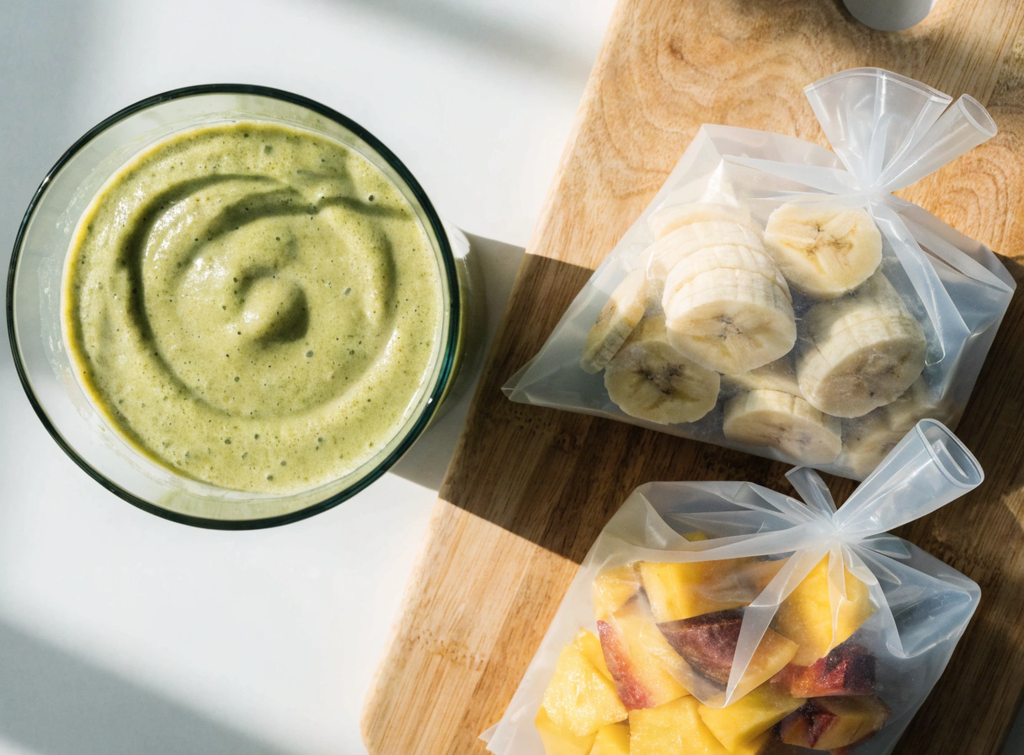
Ideal Candidate Fruits: Bananas, mangoes, pineapple, and papaya contain high fiber and starch levels. They maintain sufficient body after refreezing to yield thick smoothies.
Poor Candidate Fruits: Strawberries, raspberries, and watermelon suffer extreme drip loss. Once refrozen and re-blended, they turn icy and dilute the smoothie base.
Guidance from the National Center for Home Food Preservation guidelines emphasizes that while refreezing safe fruit preserves nutrients, flavor loss accelerates with every freeze-thaw iteration.
Risks and Limitations of Multi-Freeze Ingredients
The main limitation of refreezing is oxidation and flavor dulling. Exposure to air during the thawing phase degrades natural fruit sugars and aromatic compounds.
Food safety risks increase sharply if fruit sits in ambient temperatures. Microorganisms thrive rapidly on exposed fruit sugars between 40°F and 140°F. Never rely on smell alone for room-temperature fruit; discarded produce is far safer than foodborne illness.
Bottom Line
- Refrigerator-thawed fruit can be refrozen safely, though texture quality declines.
- Never refreeze fruit that sat at room temperature for over two hours.
- Combine refrozen fruits with fresh creamy elements to restore a velvety smoothie consistency.
Frequently Asked Questions
Can you refreeze thawed fruit for smoothies if left on the counter overnight?
No. Fruit left at room temperature overnight enters the dangerous temperature zone where bacteria multiply rapidly. Refreezing does not destroy bacterial toxins, so counter-thawed fruit must be discarded.
Does refreezing thawed fruit destroy its nutritional value?
Refreezing causes minimal vitamin loss, though water-soluble vitamins like Vitamin C may leach into the liquid runoff during drip loss. Overall mineral and fiber content remains stable.
How can I restore creaminess when blending refrozen fruit?
Add rich emulsifying ingredients such as chia seeds, frozen banana, Greek yogurt, or almond butter. These ingredients bind liquid runoff and restore a smooth mouthfeel.
Can I freeze a blended smoothie made from refrozen fruit?
While safe, freezing a fully blended smoothie made from refrozen ingredients results in heavy ice separation upon thawing. It is better to consume the smoothie immediately after blending.
How long can refrozen fruit stay in the freezer?
For optimal flavor and minimal freezer burn, use refrozen fruit within 1 to 2 months inside airtight, vapor-proof freezer bags.
One Small Twist That Makes It Taste Better
If your refrozen berries feel slightly dull or icy, add half a teaspoon of fresh lemon juice and a dash of raw honey before blending. The citric acid highlights latent fruit flavor while natural sugars balance excess acidity, instantly brightening your smoothie base.