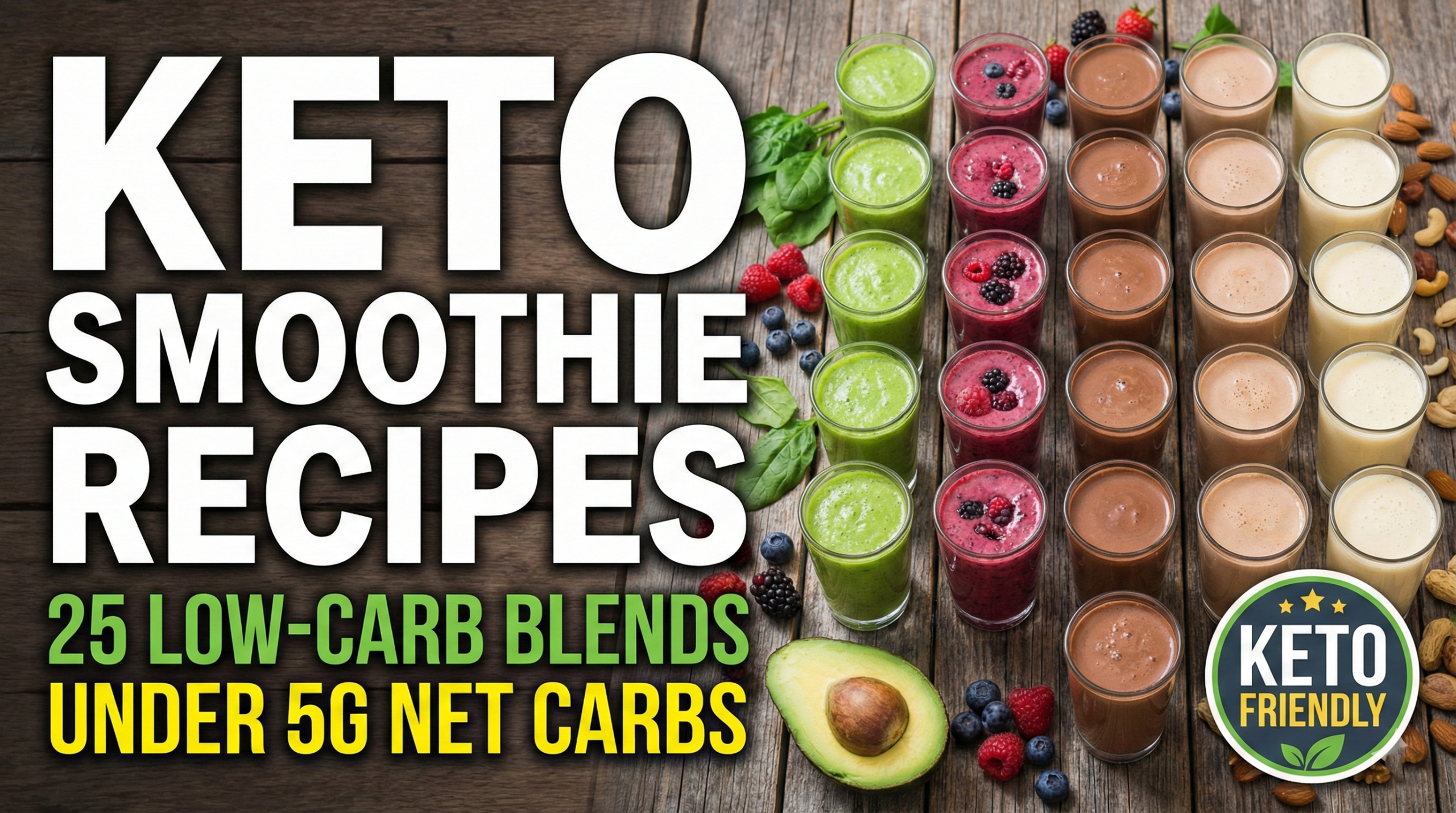
Keto Smoothie Recipes: 25 Low-Carb Blends Under 5g Net Carbs

Low carb keto smoothies solve a real problem for people following ketogenic diets — how to enjoy quick, nutrient-dense meals without breaking out of ketosis. Most traditional smoothies rely on high-sugar fruits and sweetened yogurts that can contain 30-50 grams of carbs per serving. But keto-friendly versions flip the script by using high-fat bases, strategic vegetable additions, and minimal low-glycemic fruits to keep net carbs under 5 grams while delivering filling protein and healthy fats.
This guide covers 25 practical keto smoothie recipes organized by purpose — from morning energy blends to post-workout recovery drinks. You’ll also learn which ingredients actually work within macro limits, which common “healthy” additions can quietly sabotage ketosis, and how to build your own recipes once you understand the framework.
The approach here prioritizes sustainable daily routines over aggressive optimization. These recipes work for real kitchens with normal schedules, not just Instagram-perfect meal prep sessions.
What Actually Makes a Smoothie Keto-Friendly
A smoothie qualifies as keto when it maintains the macronutrient ratio required for ketosis — roughly 70-75% of calories from fat, 20-25% from protein, and 5-10% from carbohydrates. For most people following standard keto guidelines, that translates to staying under 20-50 grams of total carbs per day, or 5-10 grams of net carbs per meal.
Net carbs matter more than total carbs. You calculate net carbs by subtracting fiber from total carbohydrates, since fiber doesn’t impact blood sugar the same way digestible carbs do. A smoothie with 12 grams of total carbs but 8 grams of fiber delivers only 4 net carbs — well within keto range.
The practical challenge is that most smoothie staples violate these ratios immediately. A single banana contains about 27 grams of net carbs. A cup of mango chunks has 22 grams. Even “healthy” additions like honey, dates, or regular yogurt push carb counts into zones that make ketosis difficult to maintain.
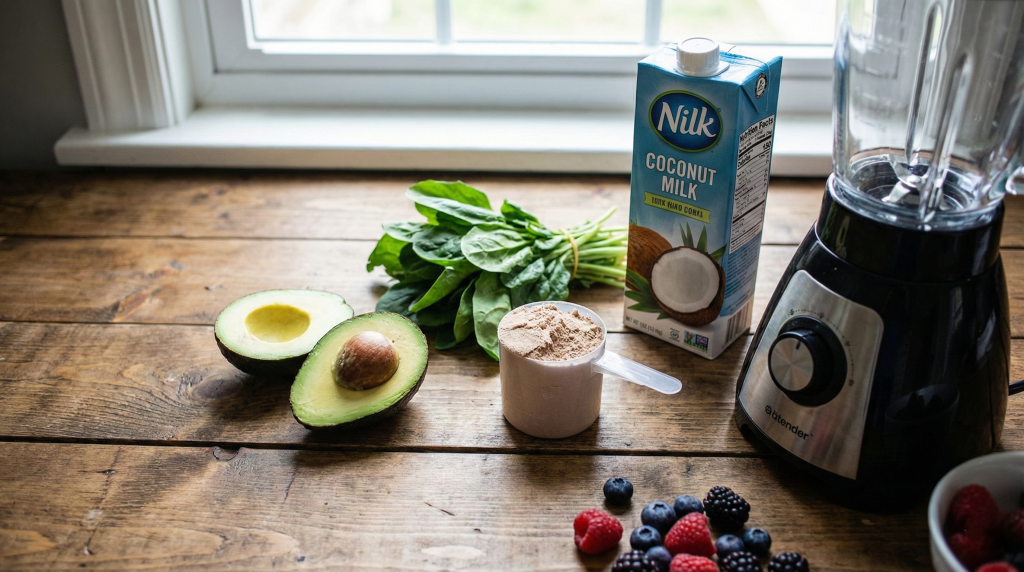
Keto smoothies replace these high-carb bases with ingredients that provide texture and nutrition without the sugar load — things like avocado for creaminess, unsweetened coconut milk for liquid, leafy greens for micronutrients, and protein powder for satiety. The goal is creating something that feels indulgent and satisfying while keeping your body in fat-burning mode.
Quick Summary
- Keto smoothies keep net carbs under 5-10 grams per serving
- Net carbs = total carbs minus fiber
- Traditional smoothie ingredients (bananas, tropical fruits, sweetened bases) break keto ratios immediately
- Successful keto blends use high-fat, low-carb ingredient swaps
Why Low-Carb Smoothies Work for Keto Dieters
The ketogenic diet functions by limiting carbohydrate intake enough that your body switches from burning glucose for energy to burning ketones derived from fat. This metabolic state, called ketosis, typically requires keeping daily carb intake low enough that glycogen stores stay depleted.
Smoothies fit this framework when they deliver quick nutrition without triggering an insulin response that would interrupt fat metabolism. The combination of healthy fats, moderate protein, and minimal carbs means you can consume a filling 16-20 ounce smoothie that supports ketosis rather than disrupting it.
The convenience factor matters more than most diet plans acknowledge. Keto requires consistent macro management, and smoothies solve the “I don’t have time to cook” problem that often leads to poor food choices. A well-designed keto smoothie takes under 5 minutes to prepare and provides portable nutrition that works for breakfast, post-workout recovery, or afternoon energy without requiring meal prep containers or reheating.
There’s also a texture psychology element. Many people struggle with keto because they miss the creamy, sweet, comforting foods they’ve eliminated. A chocolate avocado smoothie or a vanilla protein blend with coconut cream can satisfy that craving without the metabolic consequences of actual dessert. This isn’t about tricking yourself — it’s about finding sustainable alternatives that make the diet livable long-term.
The strategic use of fats in keto smoothies also helps with satiety. Fat digests slower than carbohydrates, meaning a properly formulated smoothie can keep you full for 3-4 hours compared to the 90-minute energy crash that follows a high-carb fruit smoothie. This extended satiation helps manage overall calorie intake without relying on willpower between meals.
In Short
- Keto smoothies support fat-burning metabolism without insulin spikes
- Quick preparation time solves the convenience problem that derails diets
- Strategic fat content provides 3-4 hours of satiety
- Texture and flavor satisfaction help adherence without metabolic consequences
Core Ingredients That Make Keto Smoothies Work
Understanding which ingredients fit keto macros determines whether your smoothie supports or sabotages your goals. These categories cover the functional bases you’ll use repeatedly.
Fat Sources (Primary Base)
Avocado provides the creamiest texture while adding heart-healthy monounsaturated fats. Half a medium avocado contributes about 15 grams of fat and only 2 net carbs. It blends neutral in flavor, so it won’t dominate your smoothie’s taste profile.
Full-fat coconut milk from a can delivers rich thickness and about 5 grams of fat per ounce. The medium-chain triglycerides (MCTs) in coconut milk are particularly useful for ketosis since they convert to ketones more readily than other fats, according to research published by the National Institutes of Health.
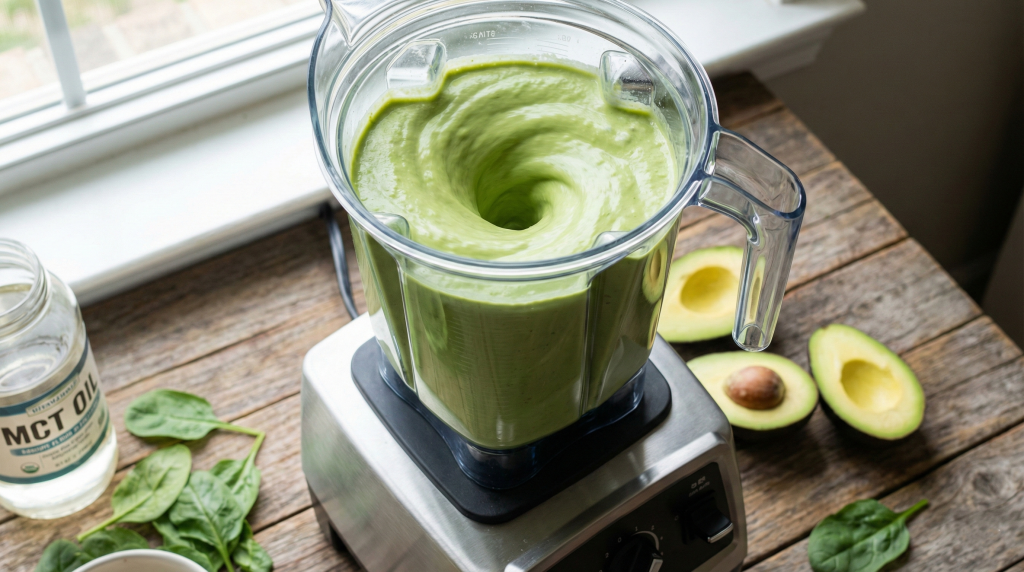
MCT oil itself offers pure, flavorless fat that blends invisibly into smoothies. Start with one teaspoon and work up to one tablespoon — too much too fast can cause digestive discomfort.
Heavy cream adds dairy-based richness with minimal carbs (less than 1 gram per two tablespoons). Use it sparingly for texture rather than as your primary liquid.
Nut butters — almond, macadamia, pecan — contribute fat along with protein and subtle flavor. Watch portions since they also carry 2-4 net carbs per two-tablespoon serving.
Protein Sources
Sugar-free protein powders form the backbone of most keto smoothies since they add 20-25 grams of protein per scoop without carbs. Whey protein isolate works for those who tolerate dairy. Plant-based options include pea protein, hemp protein, or blends. Check labels carefully since some “natural” protein powders include stevia or monk fruit, which some people find overly sweet.
Greek yogurt (full-fat, unsweetened) provides 10 grams of protein per half cup with about 4 net carbs. It creates a thicker, tangier smoothie compared to protein powder alone.
Collagen peptides dissolve easily and add pure protein (about 18 grams per scoop) with no flavor impact. They won’t create the same creamy emulsification as whey protein, but they work well combined with other thickeners.
Low-Carb Liquid Bases
Unsweetened almond milk keeps carbs minimal (1 gram per cup) while adding volume. Choose brands without carrageenan if you have digestive sensitivities.
Unsweetened coconut milk from a carton (not the canned version) provides similar carb counts with a hint of coconut flavor.
Plain water works fine when your smoothie contains enough fat and protein for texture from other sources.
Vegetables for Nutrients
Spinach and kale blend nearly invisible when combined with other ingredients, adding vitamins and minerals with almost zero net carbs. Two cups of raw spinach contains about 0.4 net carbs.
Cucumber adds hydration and volume while keeping carbs under 2 grams per cup.
Celery provides similar benefits with a slight savory note that works in green smoothies.
Frozen cauliflower rice might sound strange, but it creates thickness without flavor when blended with stronger ingredients like cocoa or peanut butter.
Strategic Fruit (Minimal Use)
Berries offer the lowest carb counts among fruits. A quarter cup of strawberries, blueberries, or raspberries adds 3-4 net carbs but provides antioxidants and natural sweetness.
Lemon or lime juice (one tablespoon) brightens flavor with less than 1 net carb.
Flavor and Function Additions
Unsweetened cocoa powder delivers chocolate flavor with only 1 net carb per tablespoon plus beneficial compounds like flavonoids.
Vanilla extract, cinnamon, nutmeg, and ginger add complexity without carbs.
Sugar-free sweeteners like erythritol, stevia, or monk fruit can be used if you prefer sweeter smoothies, though many people find well-formulated keto blends satisfying without additional sweetening.
Ice creates the cold, thick consistency most people expect from smoothies without adding anything to macros.
What This Means
- Fat sources provide texture and keep you full longer
- Protein powders are more efficient than whole-food proteins for hitting macros
- Vegetables add nutrients invisibly when blended properly
- Berries are the only fruit category worth including regularly
- Flavor comes from extracts and spices rather than sugar
25 Keto Smoothie Recipes Under 5g Net Carbs
These recipes are organized by intended use rather than arbitrary categories. Each provides approximate net carb counts based on standard measurements — your results may vary slightly based on specific brands and portion sizes.
Morning Energy Blends
1. Classic Vanilla Almond
- 1½ cups unsweetened almond milk
- 1 scoop vanilla protein powder
- 2 tablespoons almond butter
- 1 cup spinach
- ½ teaspoon vanilla extract
- Ice as needed Net carbs: 4g
2. Chocolate Peanut Butter
- 1 cup unsweetened coconut milk (carton)
- 1 scoop chocolate protein powder
- 1 tablespoon natural peanut butter
- 1 tablespoon unsweetened cocoa powder
- ½ avocado
- Ice as needed Net carbs: 5g
3. Cinnamon Roll
- 1 cup unsweetened almond milk
- 1 scoop vanilla protein powder
- 2 tablespoons heavy cream
- 1 teaspoon cinnamon
- ¼ teaspoon nutmeg
- 1 tablespoon MCT oil
- Ice as needed Net carbs: 3g
4. Green Matcha
- 1 cup unsweetened coconut milk (carton)
- 1 scoop vanilla protein powder
- 1 teaspoon matcha powder
- ½ avocado
- 1 cup spinach
- Ice as needed Net carbs: 4g
5. Coffee Coconut
- ½ cup cold brew coffee
- ½ cup full-fat coconut milk (canned)
- 1 scoop vanilla or unflavored protein powder
- 1 tablespoon MCT oil
- Ice as needed Net carbs: 2g
Post-Workout Recovery
6. Berry Protein Blast
- 1 cup unsweetened almond milk
- 1 scoop vanilla protein powder
- ¼ cup mixed berries (strawberries, raspberries)
- 2 tablespoons heavy cream
- 1 tablespoon almond butter
- Ice as needed Net carbs: 5g
7. Chocolate Mint Recovery
- 1 cup unsweetened coconut milk (carton)
- 1 scoop chocolate protein powder
- ¼ teaspoon peppermint extract
- ½ avocado
- 1 cup spinach
- Ice as needed Net carbs: 4g
8. Vanilla Collagen Builder
- 1½ cups unsweetened almond milk
- 1 scoop vanilla protein powder
- 1 scoop collagen peptides
- 2 tablespoons macadamia nut butter
- ¼ teaspoon vanilla extract
- Ice as needed Net carbs: 3g
Meal Replacement Options
9. Complete Avocado Green
- 1 cup unsweetened almond milk
- 1 whole avocado
- 1 scoop vanilla protein powder
- 2 cups spinach
- 1 tablespoon lemon juice
- Ice as needed Net carbs: 4g
10. Nutty Chocolate Meal
- 1 cup unsweetened coconut milk (carton)
- 1 scoop chocolate protein powder
- 2 tablespoons almond butter
- 1 tablespoon unsweetened cocoa powder
- 2 tablespoons heavy cream
- 1 cup kale
- Ice as needed Net carbs: 5g
11. Creamy Coconut Complete
- ½ cup full-fat coconut milk (canned)
- ½ cup unsweetened almond milk
- 1 scoop vanilla protein powder
- 1 tablespoon MCT oil
- ½ cup frozen cauliflower rice
- ¼ teaspoon vanilla extract
- Ice as needed Net carbs: 3g
Dessert-Style Smoothies
12. Chocolate Avocado Mousse
- 1 cup unsweetened almond milk
- ½ avocado
- 2 tablespoons unsweetened cocoa powder
- 1 scoop chocolate protein powder
- 2 tablespoons heavy cream
- Optional: 5-10 drops liquid stevia
- Ice as needed Net carbs: 5g
13. Peanut Butter Cup
- 1 cup unsweetened coconut milk (carton)
- 1 scoop chocolate protein powder
- 2 tablespoons natural peanut butter
- 1 tablespoon unsweetened cocoa powder
- Ice as needed Net carbs: 4g
14. Vanilla Cheesecake
- 1 cup unsweetened almond milk
- ¼ cup full-fat cream cheese (softened)
- 1 scoop vanilla protein powder
- 1 tablespoon lemon juice
- ¼ teaspoon vanilla extract
- Ice as needed Net carbs: 3g
15. Strawberry Cream
- 1 cup unsweetened almond milk
- ¼ cup fresh or frozen strawberries
- 1 scoop vanilla protein powder
- 3 tablespoons heavy cream
- Ice as needed Net carbs: 5g
Savory and Unique
16. Cucumber Mint Refresh
- 1 cup unsweetened coconut milk (carton)
- 1 cup cucumber chunks
- 1 scoop vanilla or unflavored protein powder
- ¼ cup fresh mint leaves
- 1 tablespoon lime juice
- Ice as needed Net carbs: 3g
17. Spiced Chai
- 1 cup unsweetened almond milk
- 1 scoop vanilla protein powder
- 2 tablespoons heavy cream
- ½ teaspoon cinnamon
- ¼ teaspoon cardamom
- ⅛ teaspoon ground ginger
- Pinch of black pepper
- Ice as needed Net carbs: 3g
18. Turmeric Golden Milk
- 1 cup unsweetened coconut milk (carton)
- 1 scoop vanilla protein powder
- 1 teaspoon turmeric powder
- ¼ teaspoon ground ginger
- Pinch of black pepper
- 1 tablespoon coconut oil
- Ice as needed Net carbs: 2g
High-Fat Ketosis Boosters
19. MCT Power Green
- 1 cup unsweetened almond milk
- 1 scoop vanilla protein powder
- 2 tablespoons MCT oil
- ½ avocado
- 2 cups spinach
- Ice as needed Net carbs: 4g
20. Coconut Cream Supreme
- ½ cup full-fat coconut milk (canned)
- ½ cup unsweetened coconut milk (carton)
- 1 scoop vanilla protein powder
- 2 tablespoons coconut butter
- ¼ teaspoon vanilla extract
- Ice as needed Net carbs: 3g
21. Macadamia Dream
- 1 cup unsweetened almond milk
- 1 scoop vanilla protein powder
- 3 tablespoons macadamia nut butter
- 1 tablespoon heavy cream
- Ice as needed Net carbs: 4g
Simple Three-Ingredient Blends
22. Basic Chocolate
- 1½ cups unsweetened almond milk
- 1 scoop chocolate protein powder
- ½ avocado
- Ice as needed Net carbs: 4g
23. Vanilla Simplicity
- 1½ cups unsweetened coconut milk (carton)
- 1 scoop vanilla protein powder
- 2 tablespoons heavy cream
- Ice as needed Net carbs: 2g
24. Berry Basic
- 1 cup unsweetened almond milk
- 1 scoop vanilla protein powder
- ¼ cup mixed berries
- Ice as needed Net carbs: 5g
25. Peanut Butter Essential
- 1½ cups unsweetened almond milk
- 1 scoop vanilla or chocolate protein powder
- 2 tablespoons natural peanut butter
- Ice as needed Net carbs: 4g
Key Takeaways
- Recipes are organized by intended use rather than flavor category
- Most blends stay between 3-5 net carbs using similar base ingredients
- Three-ingredient versions work when you want maximum simplicity
- Savory options exist beyond typical sweet smoothie expectations
Common Mistakes That Break Keto Smoothies
Even well-intentioned smoothie builders can accidentally push their blends out of keto range through small measurement errors or ingredient assumptions. These patterns show up repeatedly.
Hidden Carb Sources
Flavored protein powders often contain maltodextrin or other fillers that add 3-5 grams of carbs per scoop without clear labeling. Check the nutrition panel rather than trusting front-of-package claims. “Natural” doesn’t mean carb-free.
Nut milks with added sweeteners can contribute 7-10 grams of carbs per cup compared to 1 gram for unsweetened versions. The word “vanilla” on the package usually signals added sugar.
Pre-made smoothie packs marketed as “keto” frequently include dried fruits or coconut chips that concentrate sugars. Making your own ingredient combinations gives you actual control over macro counts.
Portion Creep
Nut butters are calorie-dense and easy to overestimate. The difference between one tablespoon (measured with an actual measuring spoon) and a generous scoop can be 50-100 calories and 2-4 extra net carbs.
Berries add up faster than expected. A “small handful” might actually be half a cup, which could be 7-8 net carbs rather than the 3-4 grams you assumed.
Protein powder scoops vary between brands. Some scoops hold 20 grams of powder while others hold 30-35 grams. This impacts both protein counts and any residual carbs from fillers.
Blending Issues That Affect Satiety
Under-blending leaves chunks that make the smoothie less satisfying to drink. When ingredients aren’t fully emulsified, the fat and protein separate more quickly in your stomach, reducing the extended satiety that makes keto smoothies effective meal replacements.
Over-blending can heat the mixture enough to make it unpleasant, especially with high-fat ingredients. Most blenders only need 30-45 seconds for a smooth consistency.
Timing and Storage Problems
Keto smoothies separate faster than carb-heavy versions because the fat and liquid bases don’t stay emulsified as long. Drink within 15-20 minutes of blending for best texture, or shake vigorously before drinking if you’ve stored it.
Freezing smoothies in advance changes texture significantly. The fat content makes them extremely hard when frozen, and thawing creates separation that doesn’t remix well. Fresh preparation works better for keto blends.
Bottom Line
- Read protein powder labels carefully beyond marketing claims
- Measure ingredients rather than eyeballing portions
- Blend just enough for smooth texture without overheating
- Drink soon after preparation for best consistency
Building Your Own Keto Smoothie Framework
Once you understand the macro ratios and ingredient categories, you can construct unlimited variations without following recipes. This framework approach makes keto smoothies sustainable long-term.
Start with your liquid base (1-1½ cups) — unsweetened nut milk or coconut milk from a carton provides the lowest carb foundation. This determines the overall volume and how thick or thin your final smoothie will be.
Add your protein source next (1 scoop or 20-30 grams) — this anchors your macro ratios and provides satiety. Protein powder works most efficiently, but you can use Greek yogurt if you prefer whole-food options and can fit the extra carbs.
Include your fat component (2-4 tablespoons total from any combination) — avocado for creaminess, nut butter for flavor, MCT oil or coconut oil for pure fat, or heavy cream for richness. This is what makes the smoothie filling enough to function as a meal.
Incorporate vegetables if desired (1-2 cups) — spinach, kale, cucumber, or frozen cauliflower rice all work. These contribute micronutrients without impacting the flavor profile when blended with stronger ingredients.
Consider strategic fruit sparingly (¼ cup maximum) — berries offer the best carb-to-nutrition ratio if you want natural sweetness. Skip this entirely if you’re aiming for the lowest possible net carbs.
Add flavor enhancers as needed (extracts, spices, unsweetened cocoa) — these make the difference between “drinkable” and “something you actually look forward to.” Cinnamon, vanilla, cocoa, mint, and coffee all contribute negligible carbs while dramatically improving taste.
Finish with ice for texture and temperature — more ice creates a thicker, milkshake-like consistency, while less ice produces a more drinkable smoothie.
The macro mathematics are straightforward: if your total recipe contains 8 grams of carbs and 3 grams of fiber, you’ve got 5 net carbs. If that’s split across two servings, you’re at 2.5 net carbs per serving. Most people find single-serving smoothies more practical than batch preparation for keto purposes.
Testing your tolerance matters more than hitting theoretical perfect ratios. Some people maintain ketosis comfortably at 30-40 grams of carbs per day, while others need to stay under 20 grams. Track your individual response rather than forcing yourself into unnecessarily restrictive patterns if they’re not required for your metabolism.
In Short
- Build from liquid base → protein → fat → vegetables → optional fruit → flavor
- Understand macro math so you can adjust on the fly
- Test your personal carb tolerance rather than following generic rules
- Adjust thickness with ice based on preference
Equipment and Preparation That Actually Matters
The gear you use influences both the quality of your smoothies and how consistently you’ll make them. Expensive equipment isn’t required, but certain features make a practical difference.
A high-powered blender (700+ watts) handles frozen ingredients and creates truly smooth textures without chunks of avocado or spinach fibers. Lower-powered blenders work but require more time and often leave grainy textures. Brands in the $100-150 range typically provide adequate power for keto smoothie ingredients.
Personal-sized blender cups solve the single-serving problem efficiently if you’re not making smoothies for multiple people. You blend directly in the cup you’ll drink from, which reduces both prep time and cleanup.
A kitchen scale becomes useful if you’re tracking macros seriously. Measuring nut butters by weight (grams) rather than volume (tablespoons) eliminates the most common source of carb-count errors.
Wide-mouth mason jars with lids work perfectly for make-ahead prep. Measure dry ingredients (protein powder, cocoa, spices) the night before, store in the refrigerator, then add liquid and blend in the morning. This reduces morning prep to under two minutes.
Silicone ice cube trays let you freeze small portions of coconut milk, coffee, or other liquids you use regularly. Using these instead of plain ice adds flavor and creaminess without watering down your smoothie.
The actual preparation sequence matters less than you’d think. Most ingredients can go into the blender in any order, though putting liquids in first can help the blades engage more easily with frozen items or thick nut butters.
What This Means
- Higher-powered blenders create better textures but aren’t mandatory
- Single-serve containers reduce cleanup and portion control issues
- Scales provide accuracy that volume measurements can’t match
- Pre-measuring dry ingredients the night before makes mornings faster
Managing Keto Smoothies Within Your Overall Diet
Smoothies offer convenience, but they shouldn’t automatically replace solid food meals unless that genuinely works better for your routine and hunger patterns. Some considerations for fitting them into a keto lifestyle:
Liquid calories don’t always satisfy the same way solid meals do. The act of chewing and the slower consumption of a plated meal provides satiety signals that a smoothie consumed in five minutes might not trigger. If you find yourself hungry an hour after a smoothie that should have kept you full for four hours, this might be the issue. Try eating your smoothie with a spoon more slowly, or alternate smoothie days with solid food breakfasts to compare your hunger levels.
Smoothies work better as breakfast or post-workout meals than as dinner replacements for most people. Evening meals often carry social and psychological importance that a portable drink doesn’t fulfill. Using smoothies strategically for rushed mornings or training recovery tends to be more sustainable than trying to smoothie your way through every meal.
The nutrient density varies dramatically based on what you include. A smoothie built from protein powder, almond milk, and ice provides calories and macros but very little in terms of vitamins, minerals, or beneficial plant compounds. Adding spinach, berries, and cocoa improves this considerably. Consider your overall daily nutrition rather than just macro counts.
Some people find that consuming too many keto smoothies can lead to digestive issues from the high fat content, especially if using significant amounts of MCT oil or coconut milk. Start with smaller fat portions and increase gradually as your system adapts.
The convenience factor can cut both ways. Smoothies make good decisions easy when you’re rushed, but they can also become such an automatic habit that you stop thinking about whether you’re actually hungry or just following a routine. Check in periodically about whether the smoothie is serving a purpose or just existing as meal automation.
Quick Summary
- Liquid meals don’t always provide the same satiety as solid food
- Strategic use (breakfast, post-workout) tends to work better than replacement of all meals
- Nutrient density depends heavily on ingredient choices beyond just hitting macros
- Monitor digestive response to high fat content, especially initially
Final Framework: Making Keto Smoothies Work Long-Term
The recipes and ingredient lists matter less than understanding the underlying structure. Low carb keto smoothies function when they deliver adequate fat for satiety, sufficient protein for muscle maintenance and blood sugar stability, and minimal carbs to preserve ketosis. Everything else is preference.
The 25 recipes in this guide provide starting points, but your ideal smoothie probably doesn’t exist on someone else’s list. It’s the one that uses ingredients you actually have, that fits your specific macro targets, and that you’ll genuinely drink consistently rather than forcing yourself through a week before giving up.
Success with keto smoothies comes from treating them as one tool in your overall approach, not as a magic solution. They solve specific problems — quick nutrition on busy mornings, portable post-workout recovery, satisfying dessert alternatives — but they don’t need to be your entire diet strategy.
The trade-offs are worth understanding. You exchange the fiber and chewing satisfaction of solid meals for speed and portability. You gain precise macro control and easy tracking. You might lose some of the social and psychological satisfaction of traditional meals. Whether that exchange works for your particular life and goals is something only you can determine.
Start with simple three-ingredient blends before attempting complex recipes. Master the basics of getting a smooth texture and hitting your macro targets with vanilla protein powder, almond milk, and avocado. Then expand to cocoa powder and nut butter. Then experiment with savory options or unique flavor combinations. Building complexity gradually means each addition is a clear variable rather than trying to troubleshoot a complicated recipe where you can’t identify what’s not working.
The framework here prioritizes long-term sustainability over short-term perfection. A 6-net-carb smoothie that you’ll actually make and drink beats a perfect 3-net-carb recipe that requires specialty ingredients you’ll never buy. Choose reliability over optimization, especially in the beginning.
