Green Smoothies for Beginners: How to Make Them Taste Amazing
Most people give up on green smoothies after one bad experience. The flavor feels too grassy, the texture is weird, or they just can’t get past the color. But beginner green smoothie recipes don’t have to taste like a lawn clipping. The difference between a smoothie you’ll actually drink and one you’ll dump down the sink comes down to three simple ratios: greens to fruit, frozen to fresh, and liquid to solids. Get those right, and you’ll end up with something that tastes like a tropical drink instead of a health punishment.
This guide walks you through exactly how to build a green smoothie that newcomers can tolerate, then enjoy, then crave. No complicated superfood add-ins, no expensive equipment upgrades, just a simple framework that works every time.
What This Guide Covers (And Doesn’t)
This is not a comprehensive green smoothie education. You won’t find detailed nutrition breakdowns, lengthy ingredient encyclopedias, or advanced blending techniques here.
What you will find is a single beginner-friendly recipe structure designed to solve one specific problem: making green smoothies taste good enough that you’ll actually drink them. The focus is on taste tolerance, not nutritional optimization. Once you’ve built the habit of drinking greens without gagging, you can explore more adventurous combinations later.
If you’re looking for deep dives into specific greens, superfoods, or meal replacement strategies, those topics deserve their own space. This guide assumes you just want to get started without regret.
Quick Summary
- This guide solves taste problems, not nutrition questions
- Focus is on building tolerance and habit
- Advanced topics are intentionally excluded
Three Factors That Make Beginner Green Smoothie Recipes Work
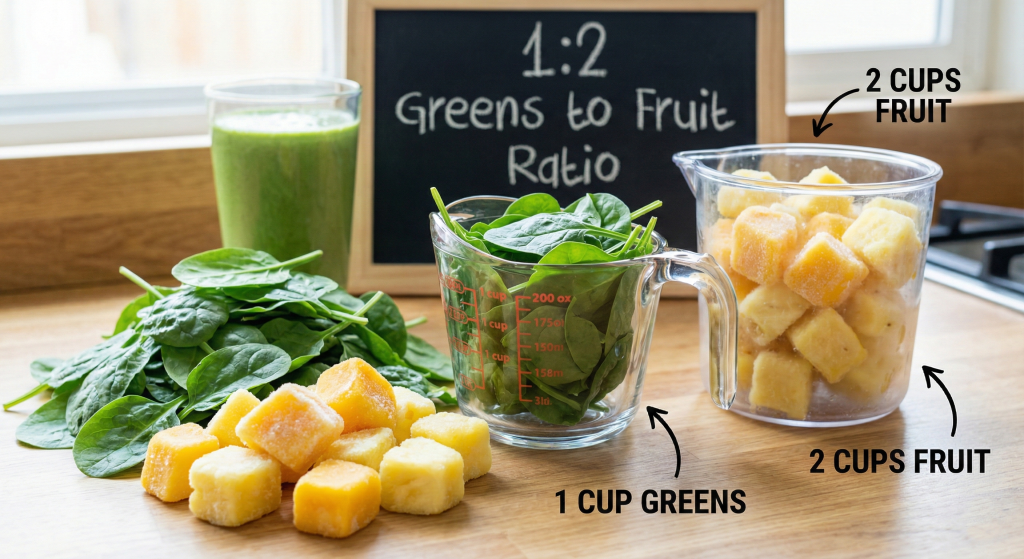
Greens-to-fruit ratio matters more than which greens you choose. Spinach and kale taste different, but both become tolerable when you use enough fruit to balance them out. For beginners, stick to one cup of greens and at least two cups of fruit. That 1:2 ratio gives you enough green nutrition without overpowering sweetness.
Frozen fruit changes everything. It adds thickness, coldness, and a shake-like texture that makes the drink feel indulgent instead of medicinal. Fresh fruit works, but frozen mango and pineapple specifically mask grassy flavors better than berries or fresh apples. The tropical sweetness cuts through spinach in ways that subtle fruits don’t.
Liquid choices affect both flavor and consistency. Water keeps things neutral and lets fruit flavors shine through. Almond milk or coconut water adds creaminess or sweetness but can clash with certain fruit combinations. For your first few attempts, plain filtered water gives you the cleanest baseline to understand what you’re actually tasting.
In Short
- Use 1 cup greens to 2 cups fruit minimum
- Frozen tropical fruit masks green flavor best
- Water as liquid keeps flavors cleanest
The Beginner Green Smoothie Recipe Framework
Start with baby spinach, not kale. Spinach has the mildest flavor profile and blends smoother in standard blenders. Even if kale is technically more nutrient-dense, it tastes sharper and requires more blending power to avoid chunks.
Here’s the framework that works:
- 1 cup baby spinach
- 1 cup water
- 1/2 cup frozen pineapple
- 1/2 cup frozen mango
- 1 fresh banana
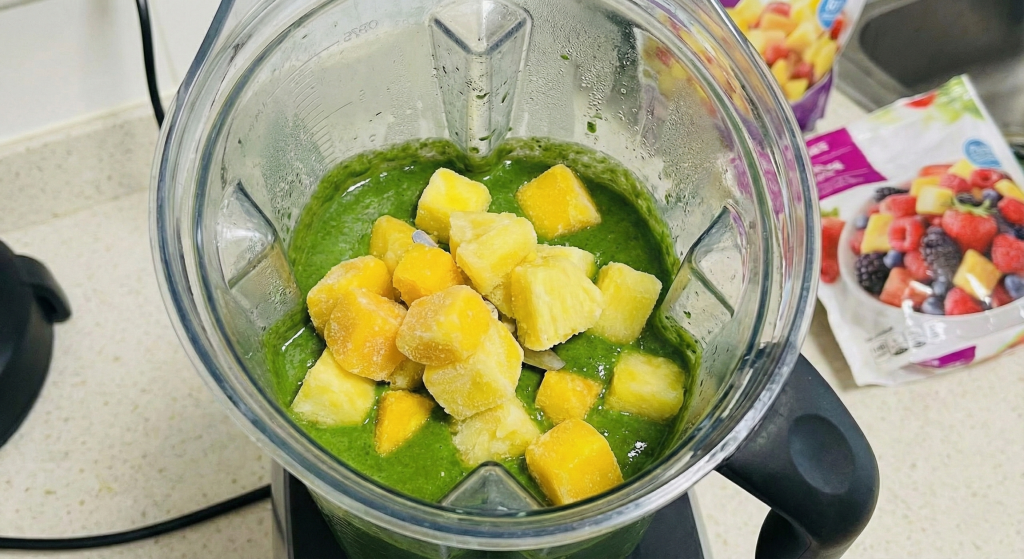
Blend the spinach and water first until completely smooth, like green water with no leaf bits. This prevents chunks in your final drink. Then add the frozen fruit and banana, blending on high until creamy. The banana adds thickness without diluting flavor like ice would.
The order matters. Greens blend easier in liquid alone before frozen fruit weighs them down. If you toss everything in at once, you’ll end up with stringy bits that ruin the experience.
What This Means
- Spinach beats kale for first-timers
- Blend greens with liquid first, fruit second
- Fresh banana provides creaminess without ice
Who These Beginner Green Smoothie Recipes Work For
This recipe structure works best for people who are genuinely new to drinking greens and need a low-risk entry point. If you’ve tried green smoothies before and hated them, this gives you a second chance with better ratios.
It’s particularly useful for:
- Anyone who associates vegetables with unpleasant childhood memories
- People who want nutrition but refuse to sacrifice taste
- Busy individuals who need something drinkable in under five minutes
This approach doesn’t work well for people with strong fruit aversions or those following very low-sugar eating patterns. Two cups of fruit means natural sugar content will be higher than veggie-heavy blends. According to the USDA FoodData Central, a cup of mango contains about 23 grams of natural sugar, and pineapple adds another 16 grams per cup.
If you’re managing blood sugar carefully or following keto protocols, this beginner framework probably isn’t your best starting point.
Key Takeaways
- Best for true beginners with no green smoothie experience
- Requires tolerance for natural fruit sugars
- Not suitable for very low-carb diets
What Can Go Wrong
The most common mistake is using too many greens too soon. Jumping from zero greens to two cups of kale creates a flavor shock that makes you never want to try again. Stick to the one-cup spinach baseline until it feels normal, then gradually increase or experiment with stronger greens.
Using fresh fruit instead of frozen ruins the texture. Room temperature smoothies feel thin and unappetizing, even if the flavor is fine. Frozen fruit creates that thick, cold consistency that makes the drink feel substantial.
Not blending long enough leaves chunks of spinach floating around. Even baby spinach needs 30-60 seconds of high-speed blending with liquid before you add other ingredients. Weak blenders or rushing this step guarantees a gritty texture.
Adding too much liquid makes everything watery. Start with one cup and only add more if the blender struggles. You can always thin it out, but you can’t thicken it without adding more frozen fruit.
Bottom Line
- One cup of greens is enough for beginners
- Frozen fruit is non-negotiable for texture
- Blend greens thoroughly before adding fruit
- Less liquid is better than too much
Making Your First Green Smoothie Decision
Your first decision is whether this recipe framework aligns with your actual goals. If you want maximum nutrition with minimum fruit, this isn’t it. If you want something you’ll actually drink consistently while building green tolerance, this is a solid start.
The second decision is how you’ll source ingredients. Frozen mango and pineapple are available year-round at most grocery stores, often cheaper than fresh. Buying them pre-cut saves prep time and reduces the temptation to skip making smoothies on busy mornings.
Baby spinach appears on the Environmental Working Group’s Dirty Dozen list, meaning conventionally grown versions tend to carry more pesticide residues. If budget allows, choosing organic spinach reduces exposure to these chemicals, though this is a preference rather than a requirement.
The final decision is whether you’ll make this once to test it or commit to three consecutive days. One attempt rarely gives you enough data to judge. Taste preferences can shift after repeated exposure, and your blending technique improves with practice.
Quick Summary
- Match the recipe to your actual tolerance level
- Buy frozen fruit for convenience and consistency
- Consider organic spinach if budget permits
- Try three times before deciding it doesn’t work
Closing Thoughts
Green smoothies don’t have to taste like punishment. When you start with mild greens, lean on frozen tropical fruit, and respect proper blending technique, you end up with something genuinely drinkable. The beginner green smoothie recipes that work aren’t complicated, they just prioritize taste tolerance over aggressive nutrition optimization. Build the habit first, then experiment with stronger greens and lower sugar ratios later.